

Many business owners follow SEO advice that sounds right but delivers poor results. These ideas spread easily because they feel simple and logical. In reality, they do not reflect how search systems work. An SEO myth forms when common belief replaces accurate understanding.
Some expect quick results, others focus only on rankings, keywords, or backlinks. Many rely on reviews, long content, or paid ads while ignoring structure, technical performance, and user behaviour. Confusion also surrounds AI tools, duplicate content, and social media influence.
These gaps lead to wasted time, missed opportunities, and unstable visibility. A clear understanding changes outcomes. When strategy aligns with how search actually works, websites perform better, attract the right audience, and build steady, long-term growth.
1. SEO is a one-time task
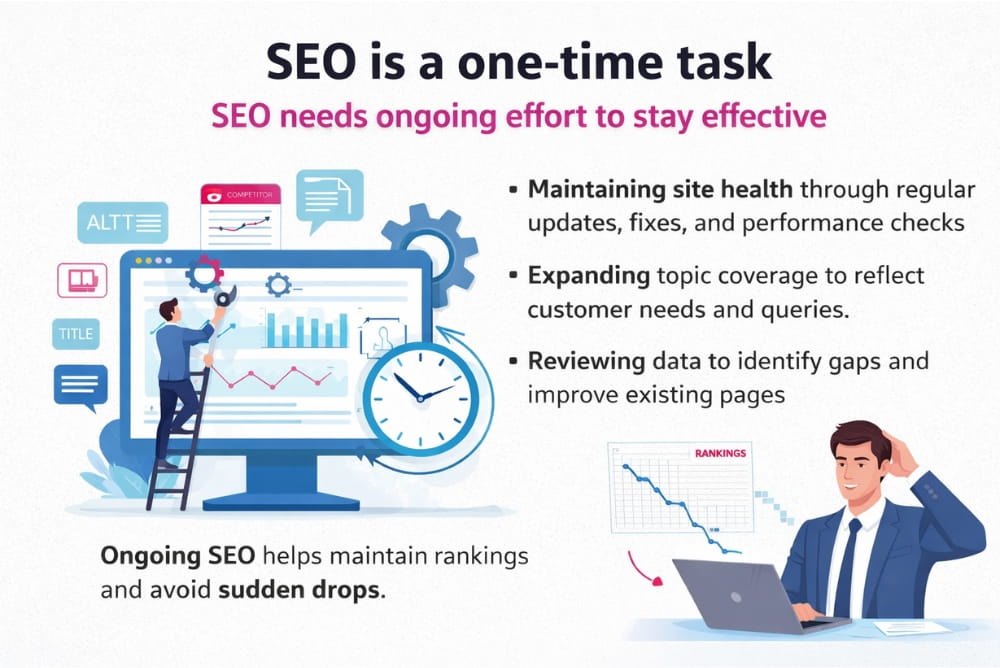
Many business owners treat SEO as a one-off setup and expect lasting results. That approach leads to a gradual decline because search visibility keeps changing. Algorithms update, competitors improve, and customer behaviour shifts over time. A website needs regular attention to stay relevant. This work covers many different areas, including title tags, meta descriptions, image ALT attributes, and copywriting.
In practice, effective SEO involves:
- Maintaining site health through regular updates, fixes, and performance checks
- Expanding topic coverage to reflect changing customer needs and queries
- Reviewing data to identify gaps and improve existing pages
Businesses that treat SEO as an ongoing process maintain stability and avoid sudden ranking drops.
2. SEO delivers instant results
Another common misconception is that SEO delivers fast results like paid advertising. Unlike ads, organic search builds trust and authority over time. Search engines need to crawl, index, and evaluate pages before assigning rankings. That process depends on competition, content quality, and site history. Many businesses stop too early because they expect quick wins. That decision delays long-term progress in rankings, traffic, and inquiries.
A more effective approach focuses on steady growth. Regular publishing, internal linking, and optimisation strengthen visibility over time. Early signals such as indexing and engagement often appear before rankings settle. Organic search works as a long-term asset. Once pages perform well, they continue to bring consistent traffic without ongoing spend.
3. More keywords improve rankings
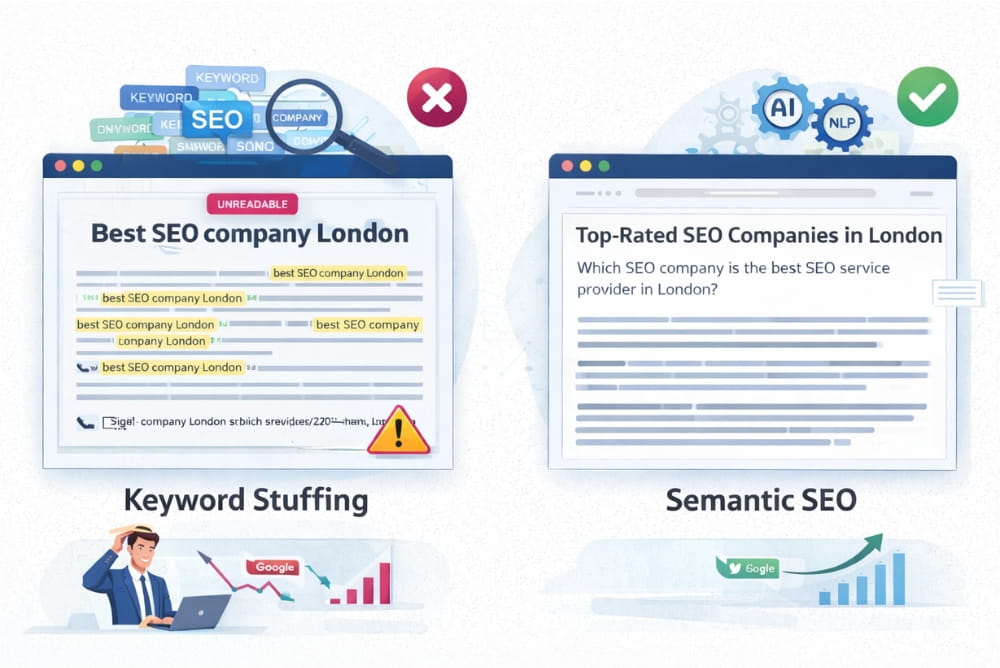
Keyword stuffing reflects outdated SEO practices. Modern search engines understand meaning, intent, and topic relationships instead of counting repeated phrases. Excessive keyword use harms readability and reduces trust. High-quality content now focuses on clarity and usefulness.
You’ve probably seen old blog posts stuffed with “best SEO company London” multiple times, and they still rank. But in 2026, that’s dangerous. Google now uses NLP and AI to assess intent, context, and semantic relevance. Keyword stuffing doesn’t just hurt your rankings; it turns off readers.
In practice, a better approach includes:
- Use semantic SEO: “Which SEO company is the best SEO service provider in London?”
- Integrate long-tail keywords and ChatGPT-style questions
- Optimise for topical relevance, not keyword density
A stronger strategy builds semantic coverage. Content includes related topics, questions, and supporting ideas naturally, improving visibility across multiple searches.
4. Ranking #1 is all that matters
Focusing only on top rankings often leads to poor business results. A high position for an irrelevant query brings visitors who do not engage. Traffic without action adds little value. A better perspective focuses on outcomes. Content must match what the visitor wants at that moment. Some look for information, others compare options, and some prepare to choose a service.
Clear structure improves results. Pages that explain services, outline benefits, and guide decisions create stronger engagement. Visibility matters, but usefulness matters more. Effective SEO connects visitors with the right information at the right stage, leading to meaningful actions rather than empty traffic.
5. Backlinks are all that matter
Backlinks signal recognition from other websites, but they do not work in isolation. Earlier strategies focused on quantity, which led to widespread misuse. Search updates reduced the value of low-quality links and shifted focus towards credibility.
Back in 2012, Google released a site-wide algorithm called Penguin. Before this, websites built large numbers of links from any source. Penguin reduced trust in sites using poor link practices. Modern link value depends on relevance. A mention from a trusted, topic-related site carries more weight than many unrelated links. Context matters as much as the link itself. Strong performance relies on alignment between content, structure, and external references rather than relying on links alone.
6. More pages mean better SEO rankings
Adding more pages does not automatically improve visibility. Large volumes of content without purpose create confusion. Search systems struggle to identify which pages provide value. A scattered structure weakens performance. When multiple pages cover similar ideas, authority spreads thin and rankings drop. Clear organisation improves understanding.
A focused approach builds stronger results. A main topic page supported by clearly defined subtopics creates logical connections. Visitors navigate more easily, and search engines recognise expertise more clearly. Effective SEO relies on precision. Well-structured, purposeful pages outperform large collections of unfocused content.
7. Technical SEO is not important
Content alone does not ensure visibility. A website must function correctly for search systems to access and process information. Technical issues such as broken links, slow loading, or blocked pages prevent proper indexing.
A strong technical setup improves accessibility. Clean URLs, logical structure, and proper indexing signals help search engines understand page relationships. This improves how content gets discovered and ranked.
Performance also affects user behaviour. Faster pages reduce frustration and keep visitors engaged. A stable and responsive site creates a better experience. Technical quality acts as the foundation. Without it, even well-written content struggles to appear in search results.

8. Paid ads improve organic SEO rankings
Paid advertising and organic search operate separately. Paid placements appear due to budget, while organic results depend on relevance and quality. One does not influence the other directly. However, advertising reveals useful behaviour patterns. Campaign data shows which queries attract attention and lead to engagement. This insight supports better content planning.
Relying only on paid traffic creates dependency. Costs increase over time, and visibility disappears once campaigns stop. Organic visibility builds stability. A balanced approach uses insights from advertising while strengthening long-term search presence through structured content.
9. Duplicate content leads to penalties
Duplicate content rarely leads to penalties. Search systems aim to present clear results, so they select one version and filter out others. This prevents repetition in search listings.
The main issue lies in confusion. When similar pages exist, search engines struggle to decide which one represents the topic best. This weakens visibility.
A clear structure resolves this. Each page needs a distinct purpose and focus. Combining overlapping content into one stronger page improves clarity. Search performance improves when signals point to a single, well-defined resource instead of multiple competing pages.
10. SEO is dead
SEO often gets labelled as “dead” whenever search technology changes. This idea ignores how search continues to evolve. Google keeps improving how information gets discovered and delivered, especially through AI-driven systems.
Search behaviour now includes voice queries, AI tools, and multiple platforms. These changes increase the need for structured, reliable, and relevant content. Businesses that build clear authority gain stronger visibility across both traditional and AI-powered results.
Effective optimisation focuses on clarity, structure, and user value. Websites that organise content well and answer real questions perform more consistently. SEO has not disappeared. It has become a core part of how people find and trust information online.
11. AI tools will replace SEO
AI tools such as ChatGPT, Gemini, and Perplexity support research and content creation. They improve speed and efficiency, but they do not replace strategy or expertise. Search systems still rely on structure, clarity, and authority to rank content.
AI depends on SEO foundations. Structured data, organised headings, and clearly defined topics help systems interpret and present information accurately. Without this structure, visibility drops. Human input remains essential. Experience, expertise, authority, and trust shape how content performs. Real examples and clear explanations strengthen credibility.
A combined approach delivers stronger results. AI improves efficiency, while human insight ensures accuracy and depth. Businesses that balance both produce content that performs well across modern search environments.
12. Keywords are no longer relevant
Keywords remain important because they reflect how people search. They show the language users use when describing needs or problems. Modern optimisation focuses on understanding those phrases rather than repeating them. Content performs better when it answers real questions using natural wording.
Different variations and related terms expand reach. This allows one page to match multiple search queries without forcing repetition. Keywords now guide content direction. Clear explanations aligned with the user's language improve visibility more than repeating exact phrases.
13. Social media has no impact on SEO
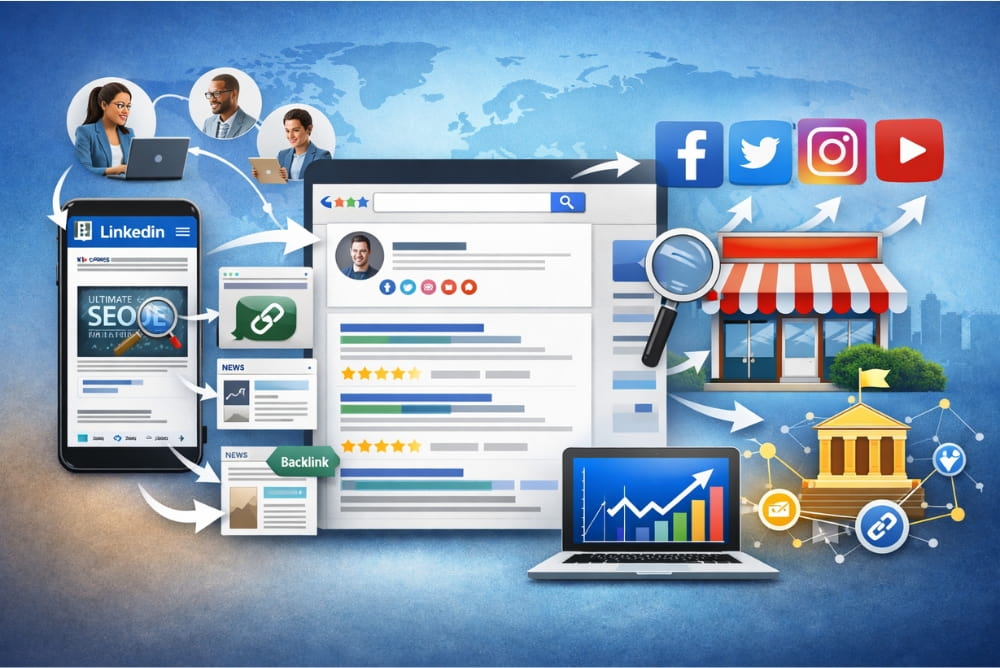
Social media does not directly influence rankings, but it affects visibility in practical ways. A shared article reaches more people, which increases visits and potential links from other websites. For example, a useful guide shared on LinkedIn often attracts attention from industry professionals who reference it elsewhere. This builds authority over time.
Social profiles also appear in search results, especially for brand names. This improves trust and helps customers find a business quickly. A consistent presence across platforms strengthens recognition and supports wider discovery beyond search engines.
14. Long content always ranks better
Content length alone does not determine rankings. Search engines prioritise how well a page satisfies user intent. Clear, relevant answers perform better than unnecessary detail. A focused approach improves results. Some topics require depth, while others need concise explanations. Matching content length to the query improves engagement and understanding.
Long-form content often performs well because it covers subjects in detail. However, excessive length reduces clarity and makes content harder to follow. Effective content delivers the right level of detail without adding filler. Quality, structure, and relevance matter more than word count.
15. Link building is dead
Link building remains relevant, but its role has changed. Search systems evaluate context and relevance rather than volume. Earlier approaches focused on collecting large numbers of links. That method reduced quality and weakened trust. Modern systems value connections that reflect genuine relevance.
A link from a related, credible source strengthens recognition. It signals that the content holds value within a specific context. Effective link building focuses on meaningful connections. Relevant mentions within the right context support stronger performance than large volumes of unrelated links.
16. Local SEO depends only on reviews
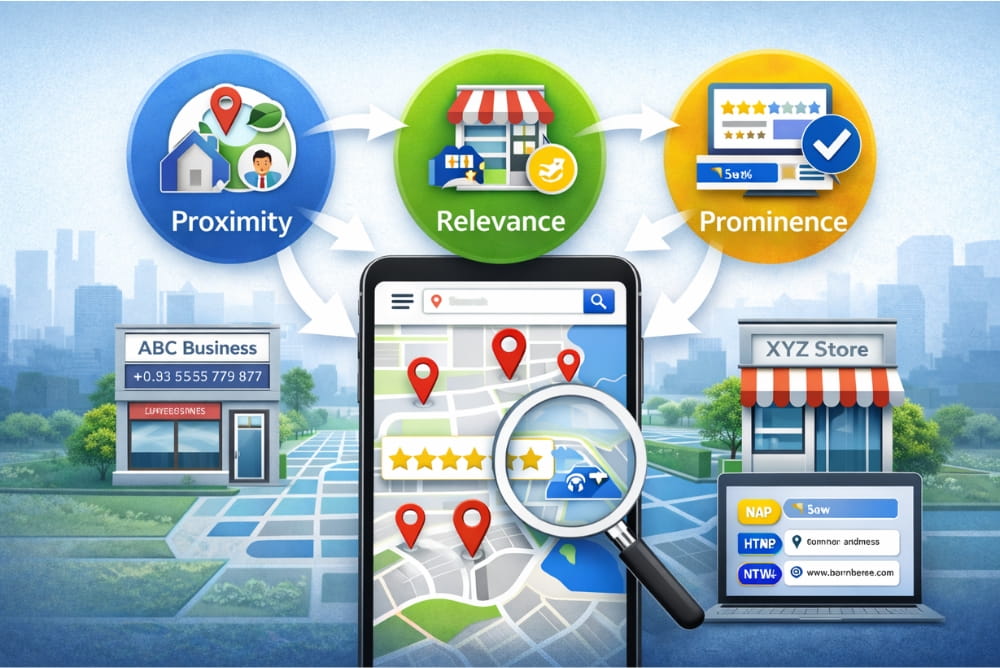
Reviews influence perception, but they do not determine local visibility alone. Search systems evaluate multiple signals when ranking local results. Location plays a key role. Proximity to the searcher affects which businesses appear first. Category accuracy and service relevance also influence rankings.
Business information must remain consistent. Name, address, and contact details need to match across platforms to build trust. A complete local presence combines accurate data, relevant content, and location signals. Reviews support credibility but do not define rankings on their own.
17. Page speed has no impact on SEO rankings
Page speed directly affects user experience and search performance. Slow pages create frustration and lead to early exits.
Search engines measure performance through specific metrics. These include loading speed, responsiveness, and visual stability. Poor scores reduce visibility. A fast website improves engagement. Users stay longer and interact more when pages load quickly and respond smoothly.
Performance also supports indexing. Faster pages allow search systems to process content more efficiently. Speed influences both visibility and user behaviour. A well-performing site creates better outcomes across all stages of interaction.
Last thoughts
SEO myths waste time and limit growth when decisions rely on guesswork instead of real data. A clear strategy brings steady visibility, better leads, and stronger trust. Focus on structure, relevance, and user intent rather than shortcuts or trends. Treat optimisation as an ongoing process that adapts to change. Use insights from performance, not assumptions. Build content that answers real questions and supports decision-making. When progress stalls or direction feels unclear, hire an SEO agency that understands modern search and delivers measurable results.
Frequently Asked Questions (FAQs)
Q: Why are SEO myths harmful to your SEO strategy and Google rankings?
A: SEO myths lead you to wrong steps that hurt your SEO strategy. Google values structure and intent, not tricks, so following myths can reduce traffic and long-term growth.
Q: Is SEO really a one-time task or an ongoing SEO strategy?
A: SEO is not one-time. A strong SEO strategy needs updates, fixes, and new content. Search trends and competitors change, so your site must improve often to keep stable rankings.
Q: Are backlinks the most important factor in SEO success?
A: Backlinks help, but they are not everything. A good SEO strategy also needs strong content, site structure, and relevance. Quality links matter more than many weak or unrelated links.
Q: Can AI tools replace SEO strategy and content expertise?
A: No, AI tools like ChatGPT support SEO work but cannot replace strategy. You still need a clear structure, real insight, and useful content to rank well.
Q: Does domain age impact SEO performance in 2026?
A: Domain age alone does not boost SEO. Older sites may have trust if they stay active, but new sites can rank well with strong content, clear structure, and good user experience.
Q: Does page speed really affect SEO rankings and user experience?
A: Yes, page speed is key for SEO. Fast sites keep users engaged and help search engines crawl pages better. Slow loading hurts rankings, traffic, and overall user experience.



Leave a Reply