
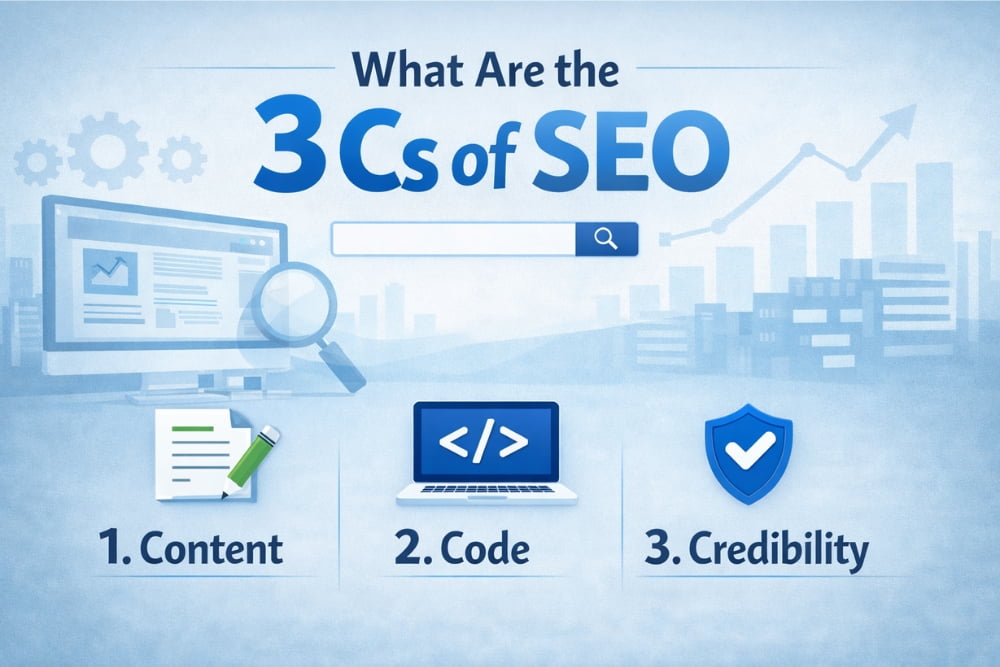
Search engine optimisation relies on three core elements that shape how a website performs in search results. These include content, code, and credibility. Together, they define how clearly a page communicates, how well it functions, and how much trust it earns.
Content explains what your business offers and answers user queries. Code controls how your website loads, displays, and stays accessible. Credibility reflects trust through links, reviews, and consistent business signals. Each element plays a distinct role, yet none works in isolation.
These three factors operate as one system. Clear information attracts visitors, strong structure supports access, and trust signals confirm value. When they align, they improve visibility and user confidence.
Applying this approach involves practical steps. Plan content around real needs, maintain a clean layout, strengthen technical setup, build local presence, and use links and visuals with purpose. This balanced method supports steady growth and long-term search performance.
1. Content
Content drives every successful search engine optimisation effort. Search engines rely on visible HTML text to understand a page. Images, animations, or complex frames offer limited signals because crawlers read text, not visuals. A page without clearly written information leaves little context, so rankings remain low.
When a crawler reviews a webpage, it scans structured text to identify relevance. Key phrases placed in the headline, near the top of the copy, and again towards the end help reinforce meaning. This layout mirrors a clear thesis structure, which improves comprehension for both algorithms and readers. Formatting also plays a role. Bold, italic, or linked phrases highlight importance and connect related topics.
Website material includes blog posts, service descriptions, product details, meta tags, and alt text. Each element adds context and helps search engines match pages with search queries. That same information guides visitors as they decide whether to take action, such as making contact or requesting a quote.
High-quality writing improves both visibility and user engagement. Clear, original information that answers real questions keeps visitors on the page longer. It also builds trust, which supports conversion decisions.
Effective optimisation combines strong writing with logical internal linking and organised page structure. This approach helps search engines understand topic relationships while guiding users through relevant sections.
Search platforms prioritise helpful, original information that meets user intent. Text, images, and videos all contribute, but written content remains the foundation. Well-placed key phrases in titles, meta descriptions, and body copy strengthen relevance and improve search performance.

2. Code
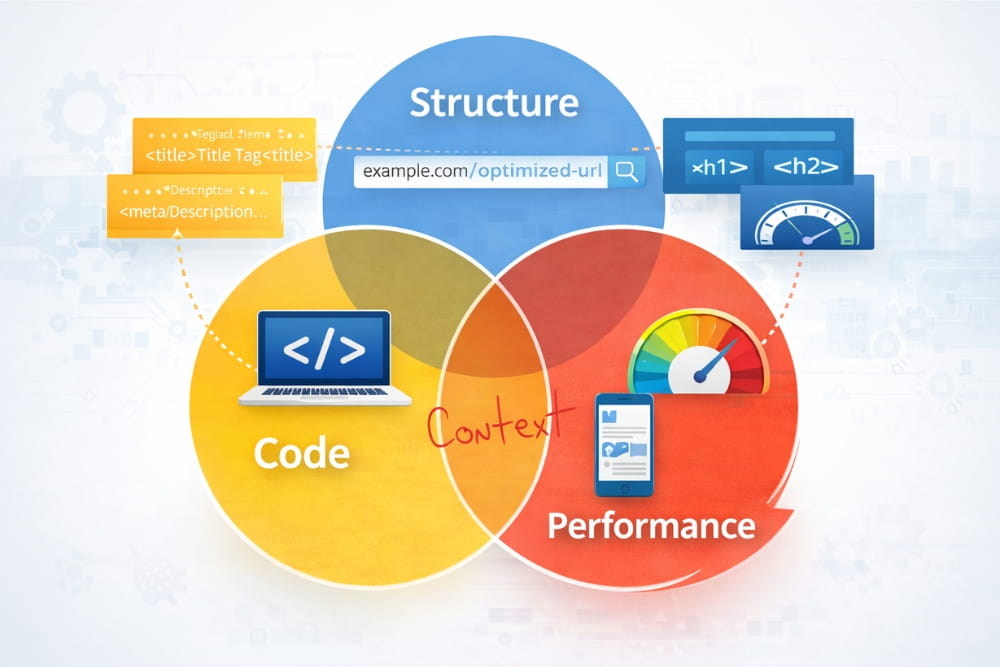
Code forms the technical base of search engine optimisation. It controls how a website loads, displays, and communicates with search platforms. Many modern sites rely on content management systems and visual editors, which often produce heavy or cluttered code. This slows performance and makes it harder for crawlers to process pages. Clean, simple HTML improves access and supports better indexing.
Search systems read structured code to move through a website. A clear layout helps them navigate pages, follow links, and understand relationships between sections. Well-organised markup also improves how content appears across different browsers and devices, which strengthens user experience.
Technical structure includes title tags, meta descriptions, heading tags, and image alt text. Each element provides context and reinforces key phrases already used in the page copy. Consistent use of these signals improves relevance and clarity. URLs also play a role. Short, keyword-focused addresses offer stronger meaning than long dynamic strings filled with random characters.
Performance remains a key factor. Fast loading pages and a responsive design ensure visitors can access content smoothly on mobile and desktop. Search platforms prioritise sites that deliver a stable and accessible experience, as poor usability reduces trust and engagement.
This technical layer acts as the foundation of a website. It supports everything users see and interact with. Strong structure, efficient code, and clear signals help both crawlers and visitors move through the site with ease, which strengthens visibility and overall performance.
3. Credibility
Credibility determines how search platforms rank one site over another. Even with strong content and clean code, a website struggles to appear in top results without trust signals. Search systems look for evidence that a business holds authority and offers reliable information.
Authority grows through links from relevant and reputable websites. When trusted sources connect to your pages, they pass value and signal importance. Links from unrelated or low-quality sites weaken that signal and harm visibility. A focused approach on quality over volume strengthens long-term performance.
Trust builds through consistent effort. Reviews, accurate business listings, and active profiles across platforms confirm that a company operates legitimately. Positive feedback from real users strengthens reputation and influences both rankings and customer decisions.
Online reputation also depends on user experience. Clear contact details, secure hosting, and professional design show that a business takes its presence seriously. These elements reassure visitors and reduce doubt during decision-making.
Search systems assess these signals together to measure reliability. A site with strong references, positive sentiment, and consistent information stands out in competitive results. This recognition improves ranking potential and attracts more qualified visitors.
Reputation acts as the final layer of search engine optimisation. It connects content and technical structure with real-world trust. As authority grows, both users and search platforms place greater confidence in the website, which supports steady visibility and long-term growth.
How the 3 C’s (Content, Code, Credibility) work together
The three elements form a connected system that drives search visibility and user trust. Each one supports the others, creating a balanced and effective SEO foundation.
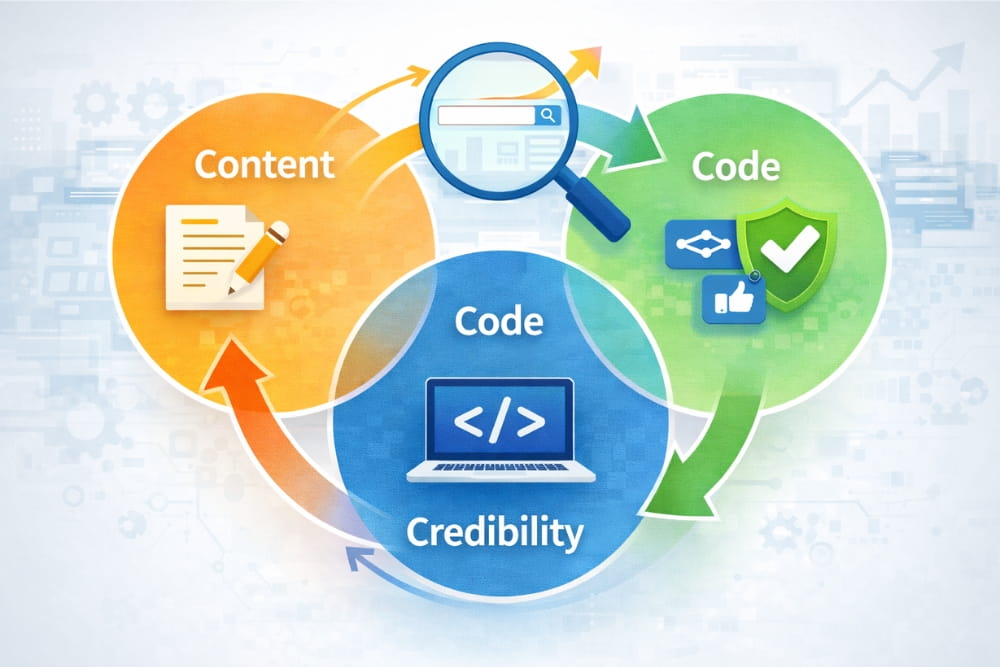
- Content attracts attention: Clear and simple information answers user questions and brings visitors to your website. It creates strong signals that show platforms your pages give real value.
- Code enables access: A clean setup improves load speed and keeps pages stable. It ensures smooth display across devices and helps systems read and organise your pages with ease.
- Credibility builds trust: Links, reviews, and mentions show authority. They help platforms see your business as reliable and active within its market.
- Integration strengthens performance: When clear writing, strong setup, and trusted signals work together, pages gain better visibility than efforts that focus on one area alone.
- Balanced effort drives growth: Steady work across all three areas supports ongoing progress. Ignoring one part weakens results and slows long-term growth.
- Combined impact improves results: Useful information brings users in, a strong setup delivers it well, and trust signals confirm value. Together, they create a system that supports lasting search performance.
How to apply the 3 C’s in your SEO strategy
To apply the 3 C’s in your SEO strategy, focus on clear, practical steps that improve visibility, structure, and trust together. Plan content around real needs, create a clean page layout, strengthen technical setup, build local visibility, and use links and visuals wisely.
- Plan content around real needs: Define topics based on customer questions. Create clear pages that answer those needs and reflect how people search for your services or products.
- Create a clean page layout: Use clear headings, short paragraphs, and logical sections. This improves reading flow and helps systems organise and understand your information.
- Strengthen technical setup: Ensure fast load speed, mobile-friendly design, and secure pages. A stable setup supports smooth access and allows proper crawling and indexing.
- Refine key page elements: Add focused titles, meta descriptions, and image alt text. These signals reinforce page topics and improve how listings appear in search results.
- Build local visibility: Use accurate business details, local keywords, and consistent listings. This helps nearby users find your business and increases trust within your area.
- Use links and visuals wisely: Connect related pages and reference trusted sources to add context. Include relevant images with clear alt text to support meaning and improve engagement.
Final thoughts
The 3 C’s create a clear and reliable approach to search engine optimisation. Content explains your value, code supports access, and credibility builds trust with both users and search platforms.
These core elements of SEO work best when applied together. A balanced focus strengthens visibility and improves how users interact with your website. Simple actions such as clear writing, clean structure, and trusted signals lead to steady progress. Consistency across all three areas supports long-term performance and helps your business stay competitive in search results.
Frequently Asked Questions (FAQs)
Q: Can small businesses benefit from the 3 Cs of SEO?
A: Yes, small businesses can grow with the 3 Cs of SEO. Clear content, clean code and strong credibility help improve local visibility and attract more relevant traffic.
Q: How do keywords fit into the 3 Cs of SEO strategy?
A: Keywords support content in the 3 Cs of SEO. They help search engines match pages to queries, while good code and credibility strengthen how well those pages rank.
Q: Do social media signals affect the 3 Cs of SEO?
A: Social media can support credibility in the 3 Cs of SEO. Shares and mentions increase brand visibility and may lead to links, which help improve trust and authority.



Leave a Reply