
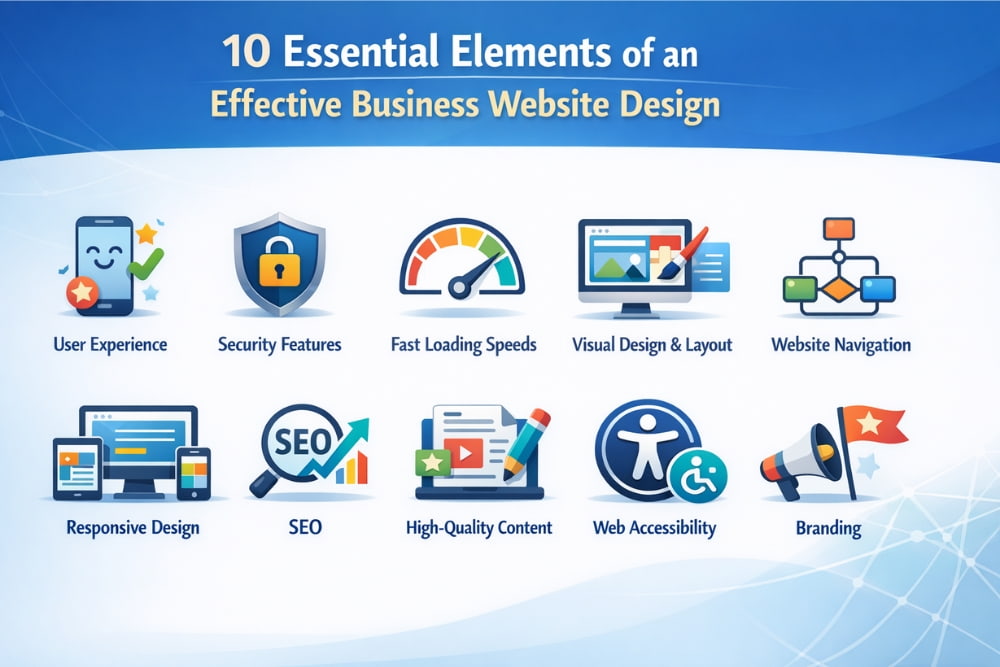
A business website plays a key role in how people view and interact with a company online. A clear and well-planned design improves usability, builds trust, and supports growth. This guide outlines ten essential elements that shape an effective business website design. It begins with user experience, followed by security and fast loading speeds, which ensure safe and smooth performance. Visual design and layout, along with website navigation, guide users through content with ease. Responsive design ensures access across devices, while search engine optimisation improves visibility. High-quality content explains value clearly, and web accessibility ensures inclusive use. Branding then ties everything together with a consistent identity.
These elements are important for effective business website design because they create a balance between usability, performance, and visibility, helping users engage and take action with confidence.
1. User experience
User experience defines how visitors interact with a website and how easily they complete tasks. It focuses on clarity, usability, and smooth movement across pages. A well-structured interface keeps attention steady and reduces frustration. UX includes elements such as navigation menus, search bars, and clear calls-to-action (CTAs), which guide users through the site. Strong design builds trust and helps users take action with ease.
Key UX principles include:
- Intuitive navigation: Clear menus, logical structure, and visible pathways help users find information quickly without confusion or extra steps.
- Consistent design: Uniform layout, colours, and typography create familiarity, making the interface easier to understand across all pages.
- Clear content and actions: Simple language, structured content, and well-placed calls-to-action guide users towards key tasks and improve engagement.
- Fast and stable performance: Optimised speed and stable layout ensure smooth interaction, reduce delays, and improve overall satisfaction during browsing.
2. Security features
Website security protects business data and builds trust with visitors. Rising cyber threats increase the need for strong protection across every site. A secure platform safeguards user information and blocks unauthorised access. It also improves search visibility, as search engines favour secure websites. Essential features include SSL certificates, secure hosting environments, firewalls, and regular updates. Together, these elements reduce risk, maintain performance, and protect both the business and its customers.
3. Fast loading speeds
Fast loading speed plays a key role in user experience and search visibility. Delays frustrate visitors and often lead to early exits, increasing bounce rates and reducing conversions. Research shows that many users leave a site that takes longer than three seconds to load. Optimised images and clean code help pages load quickly and run efficiently. Reducing scripts, using caching, and applying content delivery networks improve performance. Faster websites keep users engaged and support stronger search rankings.
4. Visual design and layout
Visual design shapes the first impression of a website and influences how users judge credibility. A clean and modern layout keeps attention focused and improves usability. Consistent styling across pages strengthens brand recognition. Strong visual structure also guides users through content and supports smoother interaction.

Key visual elements include:
- Consistent colour scheme: A unified colour palette reinforces brand identity and creates a cohesive look, helping users recognise the business and feel confident while browsing.
- Readable typography: Clear font choices and appropriate sizes improve readability, making content easier to understand across devices and reducing strain during longer sessions.
- Effective use of whitespace: Spacing between elements prevents clutter, improves focus, and creates a balanced layout that allows users to process information without feeling overwhelmed.
- High-quality imagery: Relevant and professional images enhance visual appeal, support messaging, and break up text, making content more engaging and easier to absorb.
- Structured page layout: A well-organised layout guides users through sections logically, ensuring important content appears in the right place and improves overall navigation flow.
5. Website navigation
A business website may look polished and contain strong content, yet poor navigation often leads to frustration and early exits. Website navigation refers to how pages, links, and menus connect to guide users through content. Clear structure improves access to key information and supports usability. Elements such as top menus, sidebars, footers, and breadcrumbs shape this journey. A well-planned sitemap, clear labels, a visible search bar, and accessible contact details help users move smoothly and find what they need without confusion.
6. Responsive design
Responsive design ensures a website adjusts smoothly across different screen sizes and devices. It allows pages to display correctly on desktops, tablets, and smartphones without layout issues. Mobile usage continues to rise, with reports for 2025–2026 showing that roughly 54% to over 60% of total web traffic comes from mobile devices. Some data show 54–56%, while others reach 60–64%, reflecting steady growth. By 2025–2026, around 72.6%–73.2% of users worldwide access the web only through smartphones, with over 6 billion people online. This shift highlights the need for flexible layouts, readable text, and touch-friendly design elements.

7. Search engine optimisation (SEO)
Search engine optimisation improves how a website appears in search results. It involves structuring content and technical elements so search engines understand and index pages correctly. Key factors include mobile performance, loading speed, clear navigation, and organised content. Proper use of headings, meta descriptions, alt text, and clean URL structures supports visibility. A well-optimised site attracts relevant traffic and builds trust. It also ensures pages load efficiently and deliver useful information that matches user intent.
8. High-quality, engaging content
High-quality content helps visitors understand your business and take action. It delivers clear, useful information that answers real questions. Well-structured content improves user experience and search visibility. It also builds trust by explaining services, values, and key details in a simple and direct way.
Effective content should:
- Provide clear business information: Explain products, services, and key offerings in simple terms so visitors quickly understand what the business does and how it meets their needs.
- Address user intent directly: Focus on answering common questions and solving problems with relevant information that matches what visitors expect when they arrive on the website.
- Support readability and structure: Use headings, short paragraphs, and organised formatting to make content easy to scan, helping users find important details without effort.
9. Web accessibility
Web accessibility ensures all users, including those with disabilities, access and use a website without barriers. It involves designing content and structure to support assistive technologies such as screen readers and keyboard navigation. Key practices include accessible HTML tags, readable fonts, high-contrast colours, and descriptive alt text. Clear navigation and simple layouts improve usability for everyone. Accessibility expands reach and improves overall experience.
10. Branding
Branding shapes how a business presents itself online and how users recognise it. A strong identity uses consistent colours, typography, and messaging across all pages. Visual and written elements work together to create a cohesive experience that reflects values. Clear branding builds trust and helps users form lasting impressions. A focused design avoids clutter and keeps attention on key messages, strengthening recognition over time.
Why these elements are important for an effective business website design
These elements are important for effective business website design because they shape how people use the site and how search engines read it. They bring together ease of use, speed, and clear structure. They also help build trust and keep users engaged. Over time, they support steady business growth and better results.
- Improved user experience: Clear structure, fast speed, and simple navigation create a smooth journey. Users find what they need with ease, stay longer, and take action without stress or confusion.
- Stronger search visibility: Clean structure, mobile-friendly design, and strong performance help search engines read the business website with ease. This leads to better ranking and more reach for relevant searches.
- Higher user trust and credibility: Secure setup, clear branding, and neat design build trust. Visitors feel safe while using the site, which helps them stay longer and interact with the business.
- Better engagement and conversions: Clear content, strong calls-to-action, and a simple flow guide users step by step. This keeps them engaged and increases the chance of enquiries or sign-ups.
- Long-term performance and growth: A well-built business website supports future needs. Strong basics allow easy updates, new content, and steady growth without breaking the structure or user experience.
What are common business website design mistakes?
Common business website design mistakes include slow loading speeds, poor mobile responsiveness, unclear value messaging, and confusing navigation. These issues reduce usability and cause visitors to leave within seconds. Weak calls-to-action, cluttered layouts, and a lack of trust signals reduce engagement further. Many business websites also ignore basic SEO and consistent branding, which limits visibility and credibility. A clear, fast, and well-structured design improves performance and keeps users engaged.
Final thoughts
An effective business website works when everything feels simple to use. Visitors find what they need without effort, and pages load without delay. Clear structure, fast speed, and consistent design all shape that experience. When these elements work well together, users stay longer and trust the business more. That also helps the site perform better in search results.
Choosing a web designer becomes a practical decision, not just a creative one. The right person understands how a business website needs to work in real situations, not just how it looks. That difference often shows in how well the site performs over time.
Frequently Asked Questions (FAQs)
Q: How much does a business website design cost in the UK?
A: Business website design costs in the UK vary by size and features. A simple site costs less, while a custom build costs more due to design depth, SEO work, and added functions.
Q: Do I need a professional for business website design or a DIY option?
A: A DIY option suits small projects, but a professional business website design delivers a stronger structure, faster speed, and better results that support long-term growth.
Q: How often do I need to update my business website design?
A: A business website design needs review every one to two years. Regular updates to content, speed, and layout keep the site fresh and aligned with business goals.
Q: What platform works best for business website design?
A: Platforms like WordPress, Shopify, and Wix support business website design. The right choice depends on business needs, budget, and the level of control required.
Q: How does business website design affect conversions?
A: Business website design affects conversions by guiding users with a clear layout and strong calls-to-action. Fast speed and simple structure keep users focused and drive action.
Q: What pages form a strong business website design?
A: A strong business website design includes a homepage, about page, services page, contact page, and blog. These pages explain value and help users trust the business.



Leave a Reply