
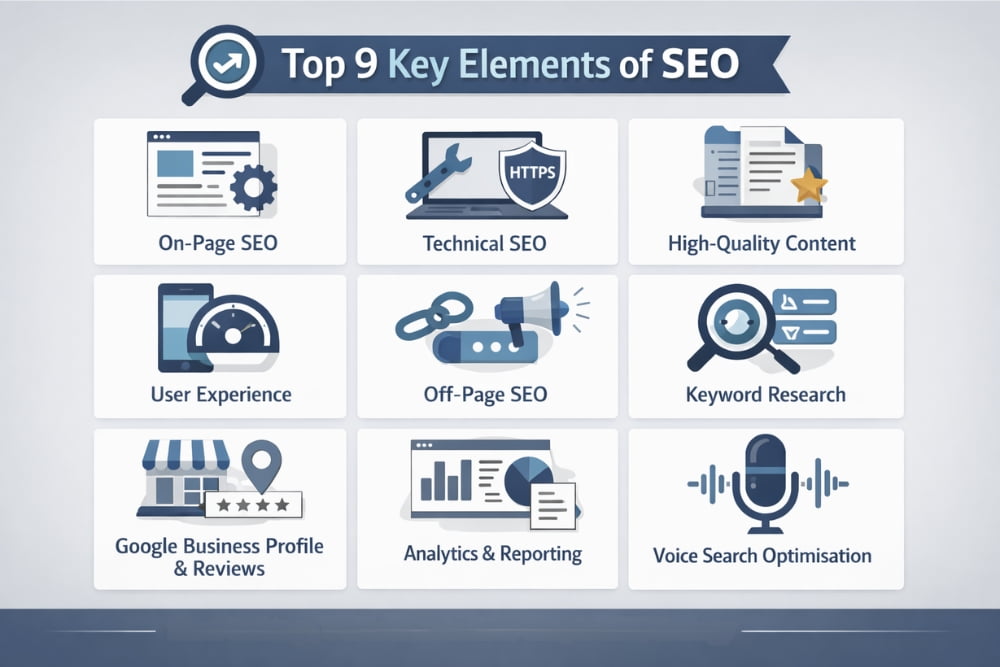
Search engine optimisation builds a clear system that helps search engines read your pages, trust your site, and rank the right content for each search. A strong plan guides users from their first query to a final enquiry in one smooth path.
On-page SEO sets focus with clear title tags, simple headings, placed keywords, optimised images, clean URLs, and helpful internal links. Technical SEO creates a solid base with fast load speed, mobile-friendly design, secure HTTPS, accurate sitemaps, clean robots rules, valid schema, and proper canonicals that protect ranking value.
High-quality content answers real questions, matches user intent, shows expertise, and links topic clusters to build authority. A good user experience keeps visitors active with steady speed, low bounce rate, longer dwell time, and easy navigation.
Off-page SEO builds trust through strong backlinks, guest features, trusted listings, and social reach. Keyword research connects search demand to service pages. Google Business Profile and real reviews drive local action with correct details and honest feedback.
Analytics and reports connect rankings to traffic, leads, and revenue, while voice search optimisation wins spoken searches with natural language and fast mobile delivery.
1. On-Page SEO
On-page SEO shapes how search engines read page meaning and how visitors move through each section. Strong work on title tags and meta descriptions, headers and content structure, keyword placement, image optimisation, URL structure, and internal linking builds clear topical focus and smooth crawl paths. Clear page signals drive faster indexation, higher click-through rate, and stable featured snippet placement through structured context.
Title tags and meta descriptions
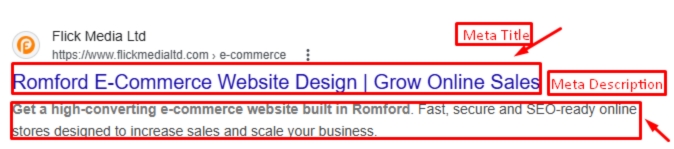
Title tags state the main topic, and meta descriptions show the page value in search results.
- Title tag length stays within 50–60 characters to keep full display
- Meta description length stays within 150–160 characters for full snippet view
- Primary keyword appears once to send a direct relevance signal
- Unique intent-led copy raises click-through rate
Accurate search result text sets the right user expectation before the visit.
Headers and content structure
H1 defines the main subject and H2 and H3 divide related ideas into clear blocks. Clean hierarchy guides the reader, lifts dwell time, and lowers bounce rate. Ordered sections help crawlers map each entity and speed up content understanding.
Keyword placement
Primary keyword sits within the first 100 words to confirm topic focus. H1 and key subheadings repeat the core term to match search intent. Natural use across body text and anchor text shows real depth and keeps the page free from stuffing. Entity-based placement sends steady context signals used by leading SEO services in the UK for long-term rank strength.
Image optimisation
File name describes the image subject and gives search engines clear context. Alt text explains the visual for accessibility and adds a relevance signal for indexing. Compressed image size improves load speed and keeps layout stable. Optimised visuals support Core Web Vitals, improve user flow, and gain reach in image search.
URL structure
Clean URL shows page meaning to users and crawlers and keeps site paths simple.
- Short URL improves reading and sharing
- Primary keyword confirms topic at a glance
- Removed parameters prevent crawl waste
- Hyphens separate words for fast recognition
Example: www.example.com/on-page-seo-optimisation rather than www.example.com/12345xyz
Internal linking
Internal link connects related pages and shows content depth across the site. Anchor text states the target topic and guides crawler movement. Planned links pass authority to key pages and extend crawl reach. Cluster linking builds full topical coverage, lifts indexation rate, and strengthens ranking power for high-value pages.
2. Technical SEO
Technical SEO builds the system that lets search engines crawl, render, and index pages with no waste. This framework connects site speed, mobile optimisation, secure site setup, XML sitemaps, robots.txt, schema markup, and canonical tags into one stable structure. Clean architecture sends clear crawl signals, protects ranking equity, and lets content and links pass value across the site.
Site speed
Site speed defines load time, input response, and layout stability during the first visit. Core Web Vitals measure LCP (Largest Contentful Paint) for main content load, FID (First Input Delay) for interaction speed, and CLS (Cumulative Layout Shift) for visual shift.
- Load time above 2 seconds raises exit rate and cuts engagement
- Minified code and compressed images reduce file size and speed delivery
- Browser caching stores assets and lowers repeat load time
- Lazy loading and fast server response improve first render
Fast performance improves rankings, keeps users active, and lifts conversion rate.
Mobile optimisation
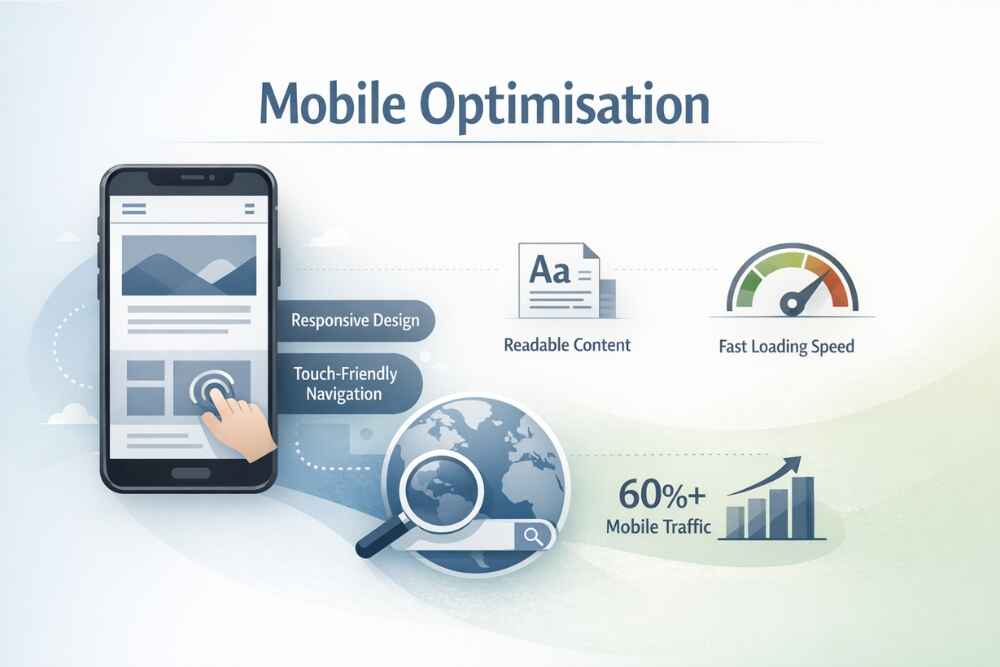
Mobile optimisation secures full usability on every screen and supports mobile-first indexing. Responsive design adjusts layout, menus, and media with no break in flow.
- Adaptive grids keep content clear on small screens
- Touch-friendly elements improve navigation accuracy
- Readable text removes the need for zoom
- Fast mobile load speed protects session duration
Mobile traffic exceeds 60% of total searches, which makes smooth mobile use a core ranking factor.
Secure site (HTTPS)
HTTPS encryption protects data transfer and functions as a confirmed ranking signal. Secure certificates establish trust, prevent browser security warnings, and improve user confidence during form submissions and transactions. Search engines prioritise secure domains during crawl and index processes. Strong security protocols support safe data handling and reinforce overall domain authority.
XML sitemaps
XML sitemap provides a structured list of indexable URLs and clarifies site hierarchy for search engines. Clean sitemap files accelerate content discovery and ensure deep pages receive crawl attention. Regular updates reflect new and updated URLs and improve indexation efficiency. Submission through search engine tools strengthens crawl accuracy and coverage.
Robots.txt
Robots.txt controls crawler access to specific directories and files. Clear directives prevent indexing of duplicate, thin, or sensitive content and protect crawl budget. Proper configuration ensures search engines focus on high-value pages. Clean syntax and correct placement in the root directory enable consistent crawler interpretation.
Schema markup
Schema markup defines content type, entity, and attributes in a structured format. Search engines read this data and show rich results with extra details.
- Article schema marks blog and news content
- Product schema shows price, stock, and ratings
- Review schema displays user feedback
- Valid code increases result visibility
Structured data improves content understanding and raises click-through rate.
Canonical tags
Canonical tag selects the main URL and stops duplicate pages from splitting authority. Clear signal keeps ranking value in one version.
- Canonical link points to the preferred page
- Consistent use across parameters preserves equity
- Correct setup protects crawl budget
- Search engines index the chosen URL
Accurate canonicalisation secures stable rankings and long-term organic strength.
3. High-Quality Content
High-quality content secures rankings through intent match, full answers, and clear topical authority. A strong page serves users who need step-by-step guides, buyers who compare services, and decision makers who want proof and data. Original insights give depth, verified facts give trust, and problem-solution structure gives fast value. Search engines rank content that shows E-E-A-T signals, keeps freshness of content, and builds topic clusters that link every key theme into one clear knowledge path.
E-E-A-T
E-E-A-T builds trust through real work, expert input, and clear brand proof. A service page shows experience through case results, shows expertise through named authors, and shows authority through trusted mentions and links. A finance guide gains trust through data sources, gains accuracy through fact checks, and gains stability in YMYL (Your Money or Your Life) results through clear business details. Strong E-E-A-T (Experience, Expertise, Authoritativeness, and Trustworthiness) signals lift engagement, protect rankings, and increase lead quality for an SEO service provider.
Freshness of Content
Freshness of content keeps rankings stable through planned updates and new value. A guide gains new traffic through updated stats, gains new crawl activity through fresh internal links, and gains longer life through added sections that match new search trends. A service page restores lost positions through revised offers, gains higher relevance through new FAQs, and gains faster reindexing through regular optimisation cycles.
Topic Clusters
Topic clusters build authority through one pillar page and many tightly linked support pages. A pillar guide targets the main service term, support articles target long-tail queries, and internal links pass relevance across the full cluster. A clear cluster structure expands keyword reach, improves crawl depth, and moves users from learning to enquiry in one smooth journey. Strong clusters raise rankings for competitive terms and grow total domain visibility.
4. User Experience
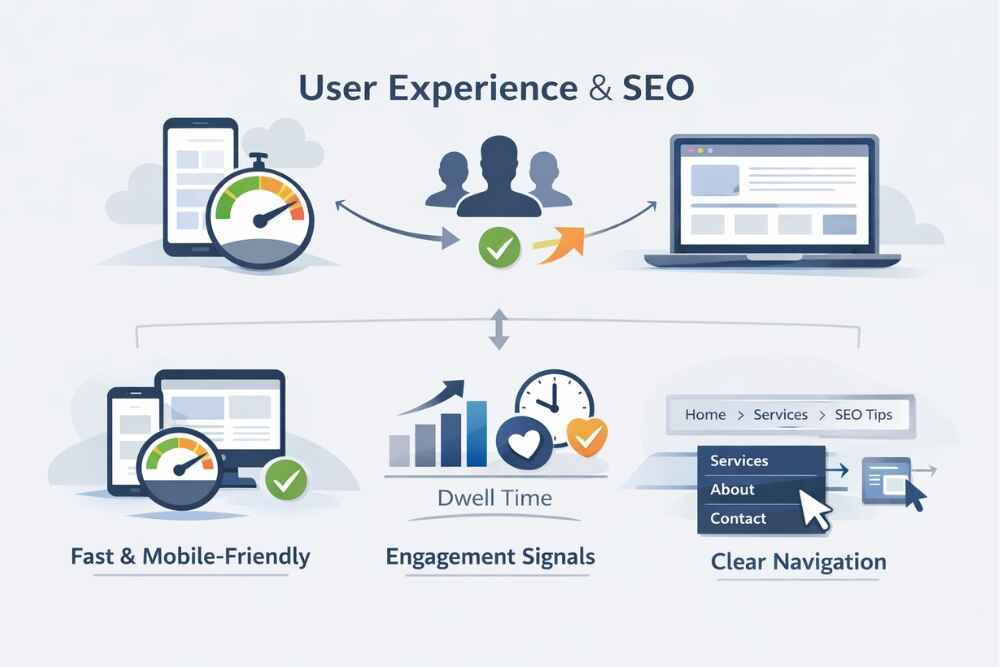
User experience improves rankings through fast load speed, mobile-friendly layout, and task-focused design. A high-performance page serves mobile users who need quick access, guides first-time visitors to key services, and helps returning users complete actions without friction. Engagement signals show value through lower bounce rate and longer dwell time, while clear navigation builds a smooth path across the site. Search engines reward pages that deliver stable performance, readable structure, and direct user flow from entry to conversion.
- Bounce Rate and Dwell Time: A high bounce rate shows fast exits with no second click, while long dwell time shows that the page meets the need. Short paragraphs, strong headings, helpful images, and short videos keep attention and reduce quick returns to search. Clear answers at the top match the query at once, then deeper sections guide users to related content and service pages. Strong engagement signals protect rankings and increase qualified leads for an SEO service provider.
- Clear Navigation: A clear menu gives instant access to main services and key pages. Logical topic groups lead users to deeper content without confusion, and breadcrumb trails show the exact location at all times. Contextual internal links move visitors to the next useful page and raise session time across the site. Simple navigation helps search engines read page links, improves crawl flow, and strengthens topical relevance for higher positions.
5. Off-Page SEO
Off-page SEO grows rankings through strong backlinks, trusted listings, guest posting, and active social media reach. A service brand earns authority when industry sites link to its guides, local directories list its details, and users share its content across platforms. These signals raise domain trust, lift keyword positions, and send ready-to-convert visitors to core service pages. Search engines rank websites that gain real mentions, real links, and real engagement beyond their own domain.
High quality backlinks
A high-quality backlink passes trust from a relevant site to a target page and raises ranking strength. A niche blog link shows topical relevance, a news feature shows authority, and a resource page link shows editorial value. A clean link profile that favours real traffic, real context, and strong domains protects the site and supports steady growth for an SEO service provider.
Guest posting and outreach
Guest posting places expert content on industry websites and earns contextual links that match the main topic. A personalised outreach email builds a real relationship, secures a natural mention, and opens the door for repeat features. A value-led pitch that shares data, case results, or unique insight gains higher approval and sends referral users who already trust the brand.
Social media
Active social media pages spread content to new users and bring steady visits to the website. A shared guide gains clicks, a saved post gains repeat views, and a branded mention gains search demand. Regular posts that show results, tips, and service wins build trust, support link discovery, and strengthen overall SEO performance.
6. Keyword Research
Keyword research drives SEO growth through real search data, clear demand signals, and direct links between queries and service pages. A strong plan serves users who search for quick answers, buyers who compare providers, and clients who send enquiries with high intent. Search volume shows demand, keyword difficulty shows the effort level, and lead terms show real business value. A balanced mix of short-tail and long-tail keywords shapes site structure, stops keyword cannibalisation, and gives each page one clear goal for an SEO service provider.
Know audience
Audience research sets keyword focus through real user needs and clear buying stages. User profiles show common pain points, show the words used in search, and show the content type that drives action. Analytics data records live queries, call and form logs show high-value phrases, and SERP review shows gaps that competitors miss. Strong audience match lifts topical relevance, raises time on page, and sends more qualified traffic that converts into leads.
Understand search intent
Search intent defines page role, content format, and the next step in the journey for each keyword. A clear match between intent and content increases rankings, improves user flow, and raises conversion rate.
- Informational intent gives guides, clear answers, and step-by-step help for early research
- Navigational intent sends users to a named brand, service page, or key resource without delay
- Transactional intent targets users who want to book, buy, or request a quote at once
- Commercial investigation intent shows comparisons, proof, and case results for final decisions
7. Google Business Profile and Reviews
Google Business Profile lifts local reach through correct business data, clear location focus, and steady review activity. A verified listing shows the service provider in map results, shows distance for “near me” searches, and builds trust that drives calls and form leads. Strong local signals help the profile rank in the local pack and bring users who need fast contact.
- City and service-area terms match real local searches and set the ranking range
- Updated hours, phone, and categories prove business accuracy for users and crawlers
- Clear service and location text expands reach for many local intents
- Verified reviews show real proof, raise click rate, and grow brand trust
A full and active profile gains map views, brings ready-to-buy visitors, and turns local searches into tracked enquiries.
8. Analytics and Reporting
Analytics and reporting show SEO results through traffic, keyword rank, goal hits, and user paths. Clear data links each landing page to its leads, links each keyword to its value, and shows exit points that need fixes. A set report cycle keeps work tied to business goals, keeps spend under control, and guides fast action when trends shift. Ongoing review finds new terms, fills content gaps, and keeps growth steady in tough markets.
9. Voice Search Optimisation
Voice search optimisation wins spoken queries through natural language, fast mobile speed, and short answer blocks. Real speech terms match how users talk, while clear answers earn featured snippets and more zero-click views. Strong voice setup puts the service page as the first spoken result for high-intent searches.
- Question-led headings match the way people speak to voice tools
- Fast mobile pages give quick access for users on the move
- Long-tail speech terms target local and action-driven searches
Strong voice focus grows mobile reach, improves access for all users, and sends ready visitors to key service pages.
What are the 3 C’s of SEO?
The 3 C’s of SEO are Content, Code, and Credibility, and this model builds a strong base for search success. Content gives clear answers that match user intent and grow full topic depth for each main service page. Code forms a clean technical system that helps search engines crawl each URL, read page parts, and index the correct version with no loss of value. Credibility grows through trusted backlinks, real brand mentions, and good user signals that show authority and lift ranking strength. This shared framework joins useful content, stable site health, and proven trust in one smooth path that brings steady traffic, quality leads, and long-term search visibility.
What are the differences between on page and off page SEO?
On-page SEO covers all work inside your website and gives each page a clear meaning for search engines and users. Strong content, clean HTML, helpful internal links, clear images, and short URLs show direct relevance and bring fast technical gains. Full control of these parts allows quick edits, simple tests, and steady growth in crawl and index flow.
Off-page SEO builds site trust through signals that sit outside your domain. Quality backlinks pass value from related websites, brand mentions increase search demand, digital PR spreads reach, and local reviews show real user proof. These signals need other sites and grow step by step over time.
How long does it take for SEO to work?
For most websites, it takes 3 to 6 months to gain clear results such as higher keyword rank, more organic visits, and stronger crawl activity. Real business growth appears in 6 to 12 months as deep content, trusted links, and clean technical health work as one system. High competition slows progress, while an older domain with a sound site base moves faster in search. A steady SEO plan adds new value each month, builds trust with search engines, and grows traffic that turns into leads and sales over time.
Is SEO important for business?
Yes, SEO is important for business as it shows your brand to people at the exact time they search for your services. High rankings bring steady organic traffic and build strong trust with new visitors. This traffic cuts the need for high ad spend and gives a lower cost per lead. A well-optimised site acts as a long-term asset that draws in users who need your offer and leads them to clear action. Strong search visibility gives your company an edge in busy markets where buyers compare many options. Ongoing SEO growth improves brand recall and supports stable expansion through real search demand.



Leave a Reply